


What You Can Find In The Winter Sky
- Erin and Out

- Dec 1, 2025
- 3 min read
Holiday lights aren’t the only thing twinkling in December. Clear winter skies make for some of the year’s best stargazing, inviting astronomers of all ages to marvel at the heavens above.
So, grab your coat, a cup of cocoa, and step outside! This is your guide for observing the winter night.
Constellations
Starry, starry night! This saying has never been more true than in the winter, when clear nights make it easy to pick out the shapes in the sky. Here are some of the brightest constellations you can find.



Orion
This famous hunter is one of the brightest constellations in the sky. A favorite companion of Artemis, Goddess of the Hunt, the Orion constellation commemorates his battle with the giant scorpion, Scorpius. It is the most visible in January and February.
How to Find the Orion Constellation
You can easily identify Orion by his belt, marked by 3 stars in a line. From there, look for the rectangular shape of Orion's body, defined by the stars Rigel, Betelgeuse, Bellatrix, and Saiph. Orion is one of the easiest asterisms to find. Use him as a landmark for locating others objects in the sky!
Gemini
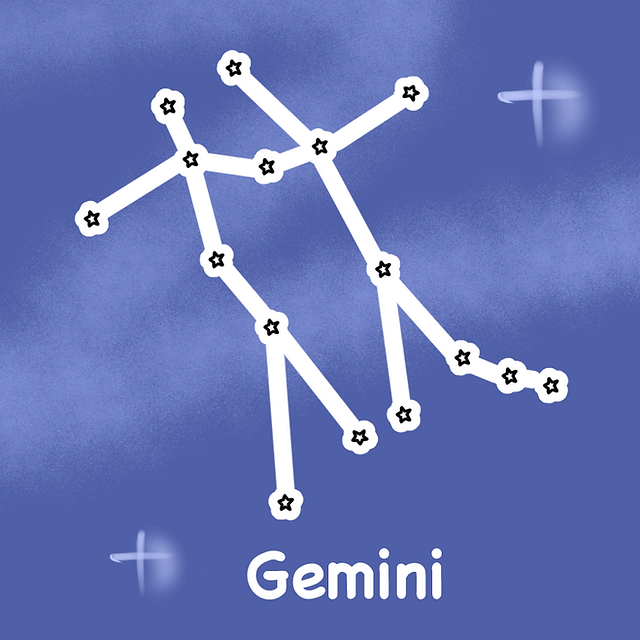
Based off the twins Pollux and Castor in Greek mythology, Gemini takes the shape of two people holding hands. It is most easily seen in the month of February when it is high in the winter sky.
How to Find the Gemini Constellation
Find Rigel in Orion, which marks the hunter's foot. From there, draw a line up until you reach the stars Castor and Pollux, which mark the twin's heads.
Taurus
There are many stories associated with this starry eyed bull, but one of the most famous involves Io, a Greek princess who is tragically transformed into a cow. Taurus is most visible in January.
How to Find the Taurus Constellation
Taurus has a reddish star called Aldebaran which marks the eye of the bull. Find Aldebaran by locating Orion's Belt and then look up and to the right.


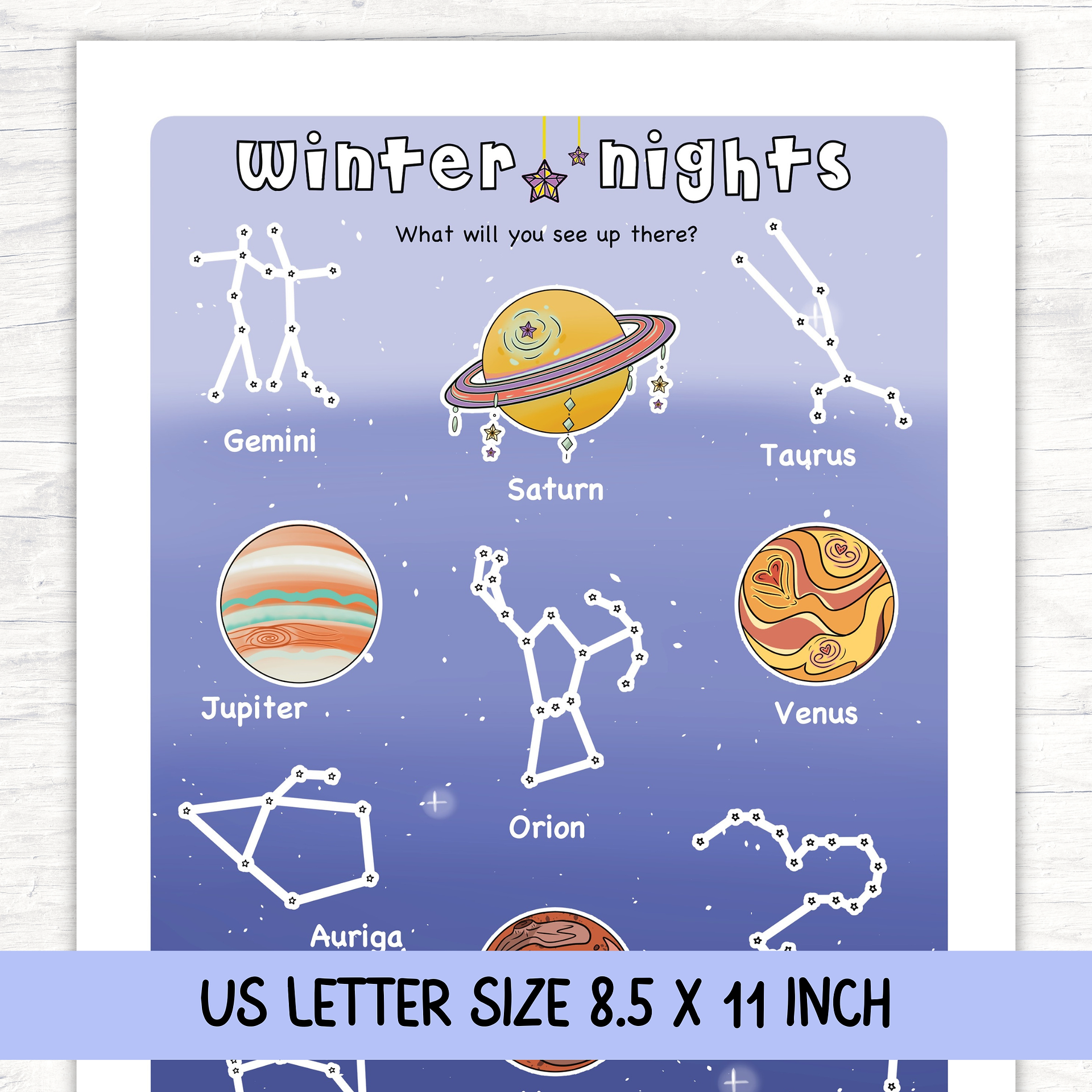
Travel the winter sky with this hand-illustrated unit study! Includes coloring pages, constellation cards and more.
Eridanus
The 6th largest constellation in the sky, Eridanus is named after the river that caught Phaethon, son of the Sun-god Helios, who drove his father's chariot off its course in the sky. Eridanus is best seen in the early evening of December and January, when its winding course of stars are brightest.
How to Find the Eridanus Constellation
Find Rigel in Orion, the star that marks the hunter's knee. From there, go south to find the start of Eridanus.
Auriga
This pentagon-shaped constellation tells the story of Erichthonius, a clever king who invented the 4-horse chariot. To reward Erichthonius for his creativity, Zeus offered the king immortality and a home in the heavens. You can most easily find Auriga in January and February.
How to Find the Auriga Constellation
First find Taurus, which sits above Orion. You'll find the pentagon-shape of Auriga nearby.
Canis Major
Woof Woof! The hound of the sky, Canis Major depicts a hunting dog chasing down a crafty fox. This star-studded hound is best seen in the month of February.
How to Find the Canis Major Constellation
Locate Orion. Use his belt to draw a line down towards Sirius, the brightest star in Canis Major.
Planets
Amongst the shining stars are the planets. How can you tell the difference between a planet and a star? The planets don't twinkle! Locate the winter planets below by searching for bright, steady streams of light.


Venus
Nicknamed the evening star, Venus is the 3rd brightest object in the sky. Find Venus just after sunset, as darkness is beginning to fall.
Mars
The red disk rising through the winter sky is Mars. Use your naked eye to find the rocky planet in the eastern part of the sky.
Jupiter
That shiny object over Orion's head? It's Jupiter! Find the gas giant in the eastern sky, no telescope required!
Saturn
This ringed giant is a wintertime staple. One of the brightest objects in the southwest part of the sky, Saturn is best viewed through a telescope so as to examine its rings.
The Moon
Across cultures and centuries, the moon has been used to track the slow-turn of the seasons. Some of those cultures have given the full moon endearing nicknames as it illuminates the sky.


Cold Moon (December)
Also known as the Long Night Moon and Oak Moon, the Cold Moon marks the beginning of the winter season.
Wolf Moon (January)
Also known as the Old Moon and the Ice Moon, the Wolf Moons listens to hungry wolves as they fill the air with their howls.
Snow Moon (February)
Also known as the Storm Moon and the Hunger Moon, the Snow Moon pays homage to the snow expected to fall at winter's end.
Happy Holidays!

Explore the Winter Sky Unit Study -->


Comments