


What Are Earth's Biomes? | Science For Kids

You can think of our planet like a giant jigsaw puzzle pieced together by biomes. A biome is a large region with distinct plant and animal communities that live together in a specific climate. Sun, rain, soil, and temperature all contribute to a biome's unique living conditions. In turn, the wildlife in each biome have certain adaptations, or traits, to help them survive.
The Earth can be divided into 5 major biomes: aquatic, desert, forest, tundra and grassland. A few of these biomes can be further divided into subcategories, like freshwater, marine, taiga, savanna and rainforest. That's just if you're picky, though!
Aquatic
It's earth's very own splash zone! Composed of freshwater and marine habitats, the aquatic biome is the largest on the planet. The marine biome, which consists of 5 oceans that cover 70% of the Earth, is characterized by its high salt content. Many marine animals have evolved ways to process their salty surroundings, through adaptations like gills, to live full-time underwater. Life is different in the freshwater biome. With a salt content of less than 1%, the lakes, streams, rivers and ponds that gurgle in the freshwater biome provide a perfect home for salt-sensitive critters.

Biome | What's the Climate? | Who Lives Here? | How do Wildlife Survive? |
Marine | High rainfall, temperature dependent on water depth | Fish, Whales, Kelp, Anemones, Crabs | Fins Streamlined bodies Salt filtration |
Freshwater | Moderate rainfall, temperature dependent on the season | Fish, Frogs, Turtles, Otters, Crayfish | Webbed Feet Floating Leaves Multiple Life Stages |


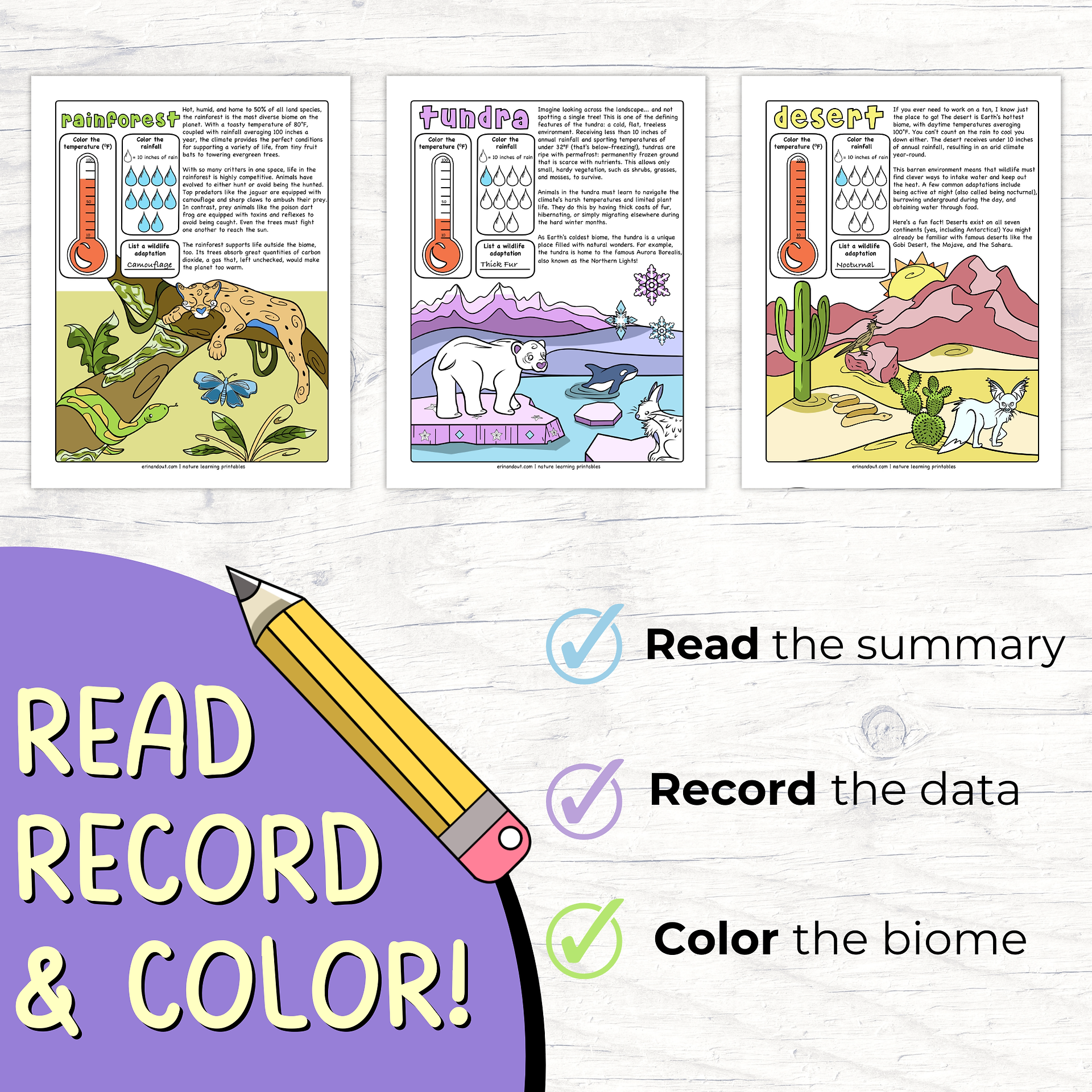
Travel the globe and explore Earth's major biomes! 7 research sheets to color and learn what makes each biome unique. Check them out ----->
Desert
Some like it hot! This is especially true for critters living in the desert, the hottest biome on Earth. Covering 20% of the planet, this sun-beaten place is characterized by its extreme temperatures, drought-resistant plants, and lack of rain. Oh, and did I mention the sand?
While we tend to think of deserts as being excruciatingly warm, there are in fact cold deserts. In fact, Antarctica is the biggest desert in the world! Any ecosystem that receives less than 10 inches a year is classified as a desert; temperature is irrelevant.

Biome | What's the Climate? | Who Lives Here? | How do Wildlife Survive? |
Desert | Low rainfall, High daytime temperatures and cool nights | Cacti, Fennec Foxes, Hawks, Snakes, Bats | Nocturnal Burrow during the day Obtain water via food |
Forest
Trees are the crowning characteristic of the forest, a biome that covers 30% of Earth's surface. Some of these forests are Temperate Forests, which are filled with trees that change with the seasons. Others are Boreal Forests (also called the Taiga), where low temperatures force trees to hang on to their leaves year-round; they simply lack the energy to grow the leaves back in the spring. Conversely, there are also hot and humid forests, called tropical forests, filled with trees that have adapted to receiving lots of rain and sun.
In short, all forests have trees. But the kinds of trees and the conditions they live in are not the same!

Biome | What's the Climate? | Who Lives Here? | How do Wildlife Survive? |
Temperate | Moderate rainfall, temperature dependent on the seasons | Deer, birds, salamanders, squirrels | Migration Hibernation Trees lose leaves |
Boreal | Low rainfall, low temperatures | Moose, Black Bears, Wolves, Owls | Thick fur Hooves Trees keep leaves |
Tropical | High rainfall, high temperatures | Jaguars, Sloths, Poison Dart Frogs, Monkeys, Snakes | Camouflage Sharp claws Tails for climbing |
Tundra
The tundra is the icebox of the world. With low temperatures and little rain, this snow-dusted land proves to be a difficult place for life to thrive. Case in point, the tundra doesn't have any trees! This is because the ground is covered in permafrost: permanently frozen ground that is scarce with nutrients. This means that only hardy vegetation, like grasses and shrubs, is able to take root.
Animals in the tundra must also be well-adapted to face the biome's cold conditions. They often have thick coats of fur and layers of fat to stay warm in the below-freezing weather. (And in case you're wondering, yes, the tundra is considered to be a cold desert!)

Biome | What's the Climate? | Who Lives Here? | How do Wildlife Survive? |
Tundra | Low rainfall, low temperatures | Polar Bears, Arctic Hares, Orcas, Walruses, Narwhals | Thick fur Fat for insulation White fur to camouflage |
Grassland
If you've seen The Lion King, then you're already well acquainted with the grassland biome. True to its name, this grass-covered region comes in a tropical (also called the savanna) or temperate form. The savanna, which covers almost half of Africa, is a hot climate with dry winters and rain-filled summers. The savanna's cousin, the temperate grassland, is milder. It experiences all four seasons, causing wildlife to adapt year-round.

Biome | What's the Climate? | Who Lives Here? | How do Wildlife Survive? |
Savanna | Moderate rainfall, high temperatures | Zebras, Lions, Elephants, Meerkats, Giraffes | Migrate with the rain Many herbivores Live in herds |
Temperate Grassland | Moderate rainfall, temperature dependent on the season | Bison, Coyotes, Foxes, Prairie Dogs, Badgers | Many herbivores Strong legs for jumping Claws for burrowing |



Comments